Yields3 ServingsPrep Time30 minsCook Time1 hrTotal Time1 hr 30 mins
100ggrams pitted prunes, roughly chopped
1 shallot, finely chopped
1garlic clove, crushed
5 ½tbsptablespoon (30ml) port
2sprigs rosemary, leaves finely chopped
½tspteaspoon sea salt
¼tspteaspoon pepper
1 x 400g pork tenderloin
4slices prosciutto
1
In a medium bowl mix together the prunes, shallot, garlic, port, rosemary, salt, and pepper. Set aside until required.
2
Using a sharp filleting knife, trim and remove any silver skin from the pork tenderloin. To butterfly the tenderloin: Horizontally slice the tenderloin, cutting through the centre of the meat, but not all the way through. Open the tenderloin like a butterfly. Lay a large piece of plastic wrap on the bench. Place the butterflied tenderloin on the plastic wrap and cover with another sheet of plastic wrap. Pound the meat until it is approximately 7mm thick, trying to keep the meat an even thickness. Remove the top layer of plastic wrap.
3
Lay a fresh sheet of plastic wrap on the bench. Vertically lay the prosciutto onto the plastic wrap, slightly overlapping the prosciutto. Flip the tenderloin on top of the prosciutto, removing the plastic wrap that was under the tenderloin.
4
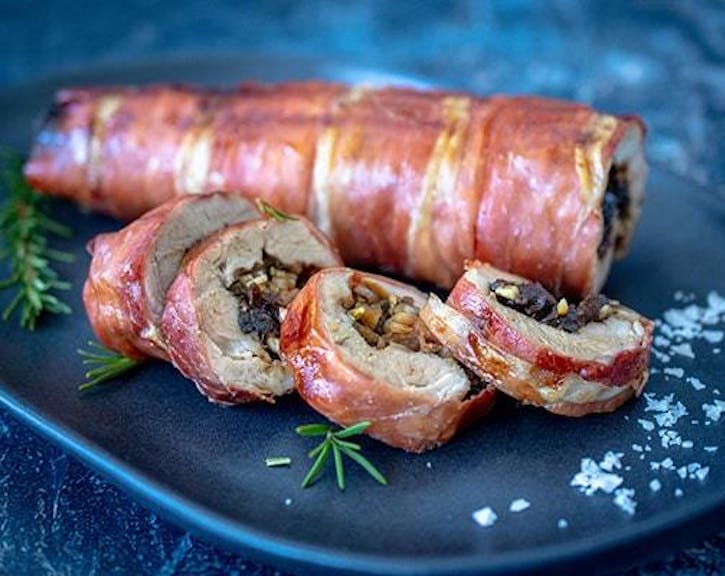
Spread the prune mixture evenly over the tenderloin. Starting at the longest edge, roll up the tenderloin tightly, using the plastic wrap as you roll. Once rolled, refrigerate for at least 2 hours to "set" the meat. Alternatively, tie the tenderloin with kitchen string to keep it together when cooking.
5
Prepare the barbecue for indirect cooking over medium heat (180° to 230°C). If using a Weber® Q, set up your barbecue with a convection tray and a trivet.
6
Roast the tenderloin over indirect medium heat, with the lid closed, until cooked through, about 20 minutes. If desired, to crisp up the prosciutto, move the tenderloin over direct heat for 2 minutes on each side. Remove from the barbecue and leave to rest for 5 minutes before slicing.
Ingredients
100ggrams pitted prunes, roughly chopped
1 shallot, finely chopped
1garlic clove, crushed
5 ½tbsptablespoon (30ml) port
2sprigs rosemary, leaves finely chopped
½tspteaspoon sea salt
¼tspteaspoon pepper
1 x 400g pork tenderloin
4slices prosciutto
Directions
1
In a medium bowl mix together the prunes, shallot, garlic, port, rosemary, salt, and pepper. Set aside until required.
2
Using a sharp filleting knife, trim and remove any silver skin from the pork tenderloin. To butterfly the tenderloin: Horizontally slice the tenderloin, cutting through the centre of the meat, but not all the way through. Open the tenderloin like a butterfly. Lay a large piece of plastic wrap on the bench. Place the butterflied tenderloin on the plastic wrap and cover with another sheet of plastic wrap. Pound the meat until it is approximately 7mm thick, trying to keep the meat an even thickness. Remove the top layer of plastic wrap.
3
Lay a fresh sheet of plastic wrap on the bench. Vertically lay the prosciutto onto the plastic wrap, slightly overlapping the prosciutto. Flip the tenderloin on top of the prosciutto, removing the plastic wrap that was under the tenderloin.
4
Spread the prune mixture evenly over the tenderloin. Starting at the longest edge, roll up the tenderloin tightly, using the plastic wrap as you roll. Once rolled, refrigerate for at least 2 hours to "set" the meat. Alternatively, tie the tenderloin with kitchen string to keep it together when cooking.
5
Prepare the barbecue for indirect cooking over medium heat (180° to 230°C). If using a Weber® Q, set up your barbecue with a convection tray and a trivet.
6
Roast the tenderloin over indirect medium heat, with the lid closed, until cooked through, about 20 minutes. If desired, to crisp up the prosciutto, move the tenderloin over direct heat for 2 minutes on each side. Remove from the barbecue and leave to rest for 5 minutes before slicing.